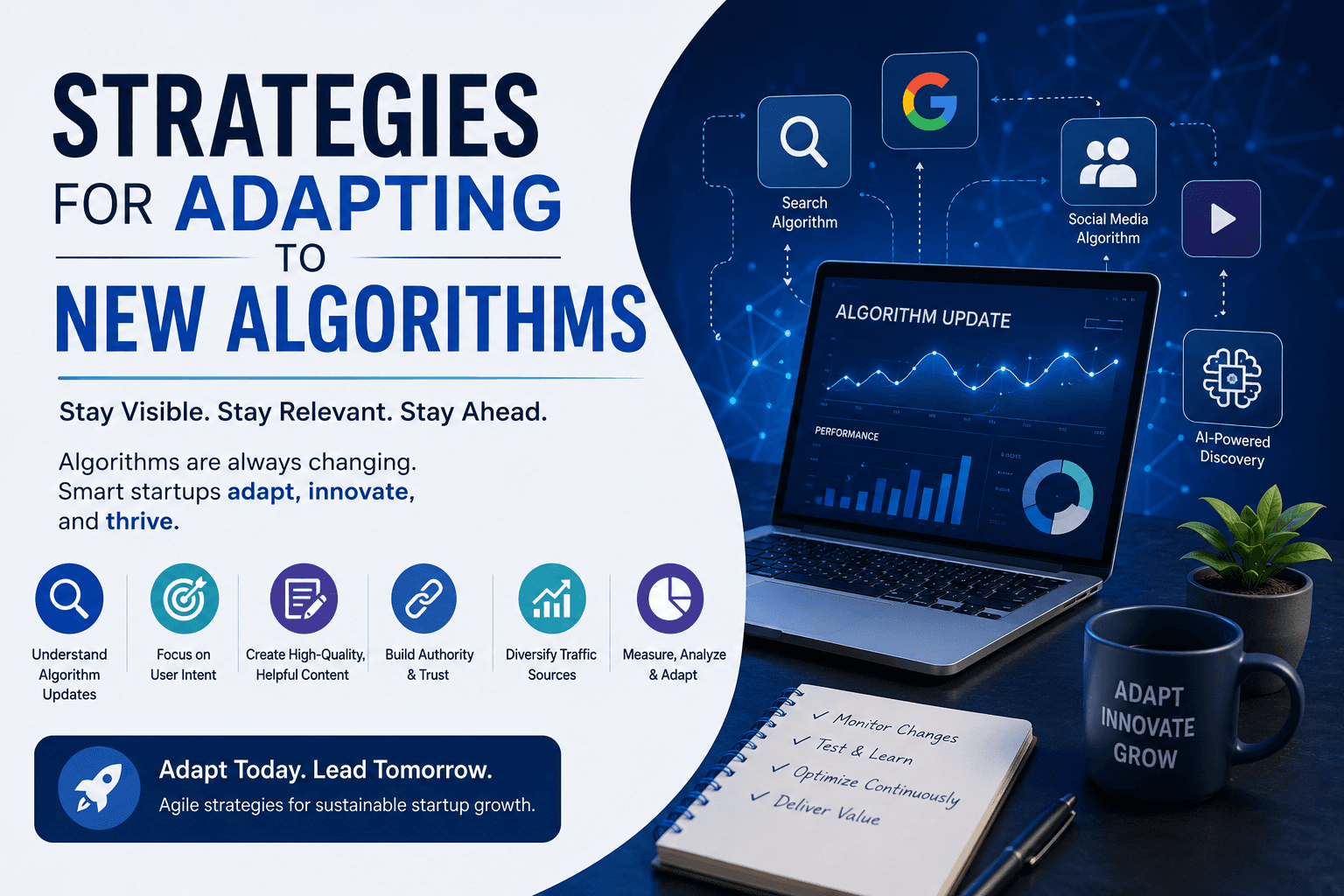
The Rules Keep Changing. Your Strategy Should Too.
Google's May 2026 Core Update — which began rolling out on May 21, 2026 and completed on June 2 — is being called one of the most significant algorithm shifts of the year. SEO professionals described it as "heavier than March" and "far more like a typical core update." Sites across every vertical — news, e-commerce, local business, agencies — felt the impact.
If your traffic dropped recently, this update is likely why. And if it didn't? Now is still the time to act — before the next one lands.
Here's exactly what changed and how to stay ahead.
What's Driving Algorithm Changes Right Now
The May 2026 update didn't arrive in isolation. It landed the same day Google announced Gemini 3.5 Flash as the AI engine powering its search features — signalling that traditional SEO and AI-assisted search are now inseparable.
The core themes behind recent updates:
AI Overviews are replacing clicks — Click-through rates for the #1 organic result have dropped from 27% to as low as 11% on AI-heavy queries. Ranking is no longer enough. You need to become the source Google's AI cites.
Information Gain is now a ranking signal — Google is actively measuring how much new knowledge your content adds. If your page disappeared tomorrow and no one would miss it, it won't rank well.
E-E-A-T has been tightened — Experience, Expertise, Authoritativeness, and Trustworthiness are no longer extras. They're table stakes.
Domain-level topical authority matters more than individual pages — Sites with deep, coherent coverage of a subject area are outperforming those with scattered, broad publishing.
Composite Core Web Vitals scoring — Since March 2026, Google aggregates LCP, INP, and CLS into a single composite score. Failing even one metric now compounds the penalty.
2026 Core Update Timeline (Quick Reference)
Update | Date | Key Focus |
|---|---|---|
February 2026 | Feb 5 – Feb 27 | Discover feed; favoured local expertise, reduced clickbait |
March 2026 Spam | March 24–25 | Scaled AI content abuse, expired domain manipulation, parasite SEO |
March 2026 Core | March 27 – April 8 | Information originality, topical authority, first-party data |
May 2026 Core | May 21 – June 2 | Broad re-ranking; AI search integration, E-E-A-T tightening, UX signals |
6 Strategies to Stay Ahead
1. Create Content That Adds Something New
Google's March and May updates both rewarded Information Gain — content that contains something no other page offers. That means original research, real case studies, proprietary data, firsthand testing, and expert perspectives that require actual access or experience. Stop rephrasing what already ranks. Start adding what doesn't exist yet.
2. Build Topical Authority, Not Just Blog Posts
Scattered content across unrelated topics is now a liability. Build content clusters: one strong pillar page per topic, supported by sub-topic articles, FAQs, how-to guides, and comparison pages. Sites that own a subject area deeply are compounding their ranking advantage with every update.
3. Strengthen Your E-E-A-T Signals — Urgently
Add real author bios with credentials and external links to every article
Build named authors' external visibility (industry publications, events, LinkedIn)
Replace generic "Editorial Team" bylines with identifiable, verifiable people
Keep your About page, contact details, and business information current and specific
4. Optimise for Composite Core Web Vitals
Since March 2026, Google scores LCP, INP, and CLS together. Passing two out of three isn't enough anymore. Run Google PageSpeed Insights and Search Console's Core Web Vitals report across your entire site — not just your homepage.
5. Optimise for AI Overviews, Not Just Rankings
With AI summaries now answering queries before users click, the new goal is being cited inside those overviews. To get there: use structured data (FAQ, HowTo, Article schema), write with clear answer-first structure, use verifiable claims and cited sources, and ensure your content reads as a trustworthy reference rather than a promotional page.
6. Diagnose Post-Update Correctly
Google recommends waiting at least 7 full days after a core update completes before analysing Search Console data. Compare the stabilised post-update week against the week before the rollout began — not during it. Look for folder-wide or template-wide drops, not single keyword movements, to identify real patterns.
What to Stop Doing
Old Tactic | Why It's Hurting You in 2026 |
|---|---|
Keyword stuffing | Actively penalised; hurts AI readability |
Unreviewed AI-generated content at scale | Hit hard by March and May spam updates |
Generic content that mirrors what already ranks | Fails Google's Information Gain signal |
Backlinks from unrelated or low-authority sites | Parasite SEO targeted in March spam update |
Changing publish dates without updating content | Flagged as fake freshness |
Publishing across unrelated topics for traffic | Dilutes topical authority domain-wide |
How 99 Visual Solutions Helps
We don't just build websites — we build websites engineered to rank and hold through algorithm volatility. Our SEO services include:
Technical SEO audits — Composite Core Web Vitals, crawlability, indexing, and structured data
Content strategy — Topical authority mapping, Information Gain analysis, and editorial production
E-E-A-T optimisation — Author credibility, on-page trust signals, and entity clarity
AI visibility — Schema markup, answer-first content structure, and AI Overview eligibility
Post-update recovery — Diagnosing drops, prioritising fixes, and rebuilding lost visibility
Whether you're recovering from the May 2026 update or building a foundation that won't need recovering — we help you adapt with confidence.
Ready to Future-Proof Your SEO?
Algorithm changes aren't going away. With Google now rolling out core updates roughly every 6–8 weeks, reactive SEO is a losing strategy.